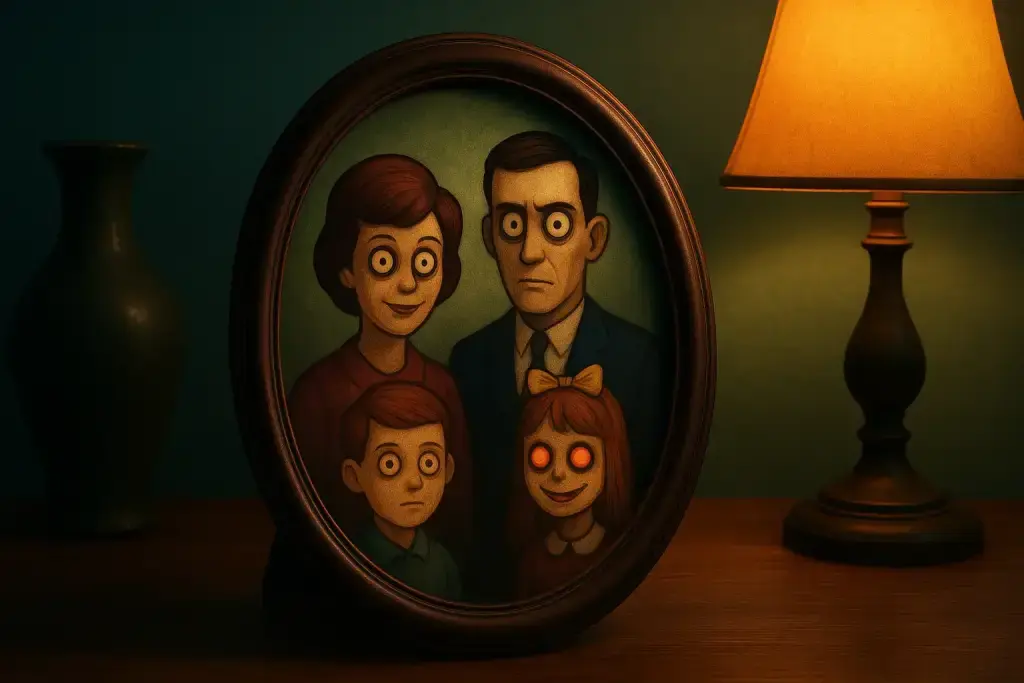
A reel set that expands from six rows to seven, multiplying paylines into the tens of thousands, is not a gimmick - it's an engineering decision that changes how a player relates to risk. That decision sits at the heart of this release, and it's paired with an unusual theme: a cartoonish, slightly unsettling household where domestic comfort curdles into dread. The combination works better than it has any right to. Most horror-themed slots lean on gore or jump-scare aesthetics; this one builds its tension through atmosphere, family portraits with wrong eyes, creaking floorboards rendered in pixel detail, and a soundtrack that shifts key just often enough to keep a player alert.
What follows is a close look at how the mechanics, the theme, and the math model fit together - and whether that fit produces a slot worth your spins. Readers who care about return-to-player figures, hit frequency, and the practical experience of high-volatility swings will find concrete answers here, not marketing language. The review also addresses who this game actually suits, because a high-variance, horror-tinged family slot is not for everyone, and pretending otherwise would be dishonest.
What Makes the Nightmare Family Slot Stand Out
Every slot release competes against thousands of near-identical titles built on the same templates. The nightmare family slot separates itself by refusing to pick a single lane - it borrows the visual language of family sitcoms, twists it through a horror lens, and runs the whole thing through a Megaways engine. That layering of theme and mechanic is rarer than it sounds. Most horror slots default to static reel grids because tension-building design often prioritizes mood over structural complexity. Here, the opposite happens: the volatility of the reels becomes part of the horror itself, since players never know how many ways to win they'll get on a given spin, mirroring the unpredictability of the story being told on screen.
A Fresh Take on Horror Slot Gameplay
Horror slot gameplay usually relies on familiar tropes - haunted houses, zombies, slashers. This title instead builds dread around something more mundane and arguably more effective: a nuclear family whose domestic routines are subtly, then overtly, wrong. A dinner table scene becomes a bonus trigger. A family photograph animates mid-spin. The horror is suggested rather than shown outright, which keeps repeat play from feeling stale after the initial shock wears off.
Why the Family Theme Works With Horror
Pairing warmth and menace is a classic storytelling technique, and it translates surprisingly well to reel design. The family-themed slot game angle gives players recognizable symbols - parents, children, pets, household objects - that carry emotional weight before the horror elements recontextualize them. A teddy bear symbol feels charming until its eyes glow red during a bonus round. That contrast does more narrative work than any amount of blood-splatter imagery could.
Visual and Audio Design Choices
The art direction leans into muted color palettes broken by sudden flashes of red or sickly green during win sequences. Audio cues - a music box melody that detunes as the reels spin - reinforce the uncanny tone without resorting to cheap scares. These design choices matter because they sustain atmosphere across long sessions, which high-volatility games demand given their dry spells between major wins.
Breaking Down the Megaways Slot Features
Megaways mechanics aren't new, but their implementation here deserves scrutiny because the system directly shapes both pacing and perceived fairness. Rather than a fixed number of paylines, each spin generates a randomized number of symbols per reel, producing a win-ways count that can swing from a few hundred to over one hundred thousand. That range is the entire appeal and the entire risk of the format.
Cascading Wins and Reel Mechanics
After a winning combination lands, contributing symbols vanish and new ones cascade into their place, potentially triggering chain reactions from a single spin. This mechanic rewards patience - a losing-looking spin can transform into a multi-stage win sequence once cascades begin stacking. It also extends the suspense of each spin, since the outcome isn't settled until the cascade fully resolves.
Multiplier Trails and Escalating Rewards
Consecutive cascades typically build a multiplier trail, increasing the value of each subsequent win within the same spin sequence. In practice, this means a single base-game spin can occasionally deliver what feels like a mini bonus round, especially when three or four cascades chain together. The multiplier resets on a non-winning spin, which keeps the system balanced rather than runaway.
How Megaways Changes Win Potential
The variable ways-to-win structure is the defining element among megaways slot features, and it directly explains why this title sits in the high-volatility category. More ways to win doesn't mean more frequent wins - it means a wider spread of possible outcomes, which is a mathematically different proposition than simply adding paylines to a fixed grid.
- Win-ways counts fluctuate every spin, unlike fixed-payline slots
- Cascading reels allow one spin to produce several win events
- Multiplier trails reward sustained cascade sequences
- Reel height variation (typically two to seven rows per reel) drives the ways-to-win range
High Volatility Megaways: What Players Should Expect
Volatility describes how a slot distributes its payouts over time - low-volatility games pay small amounts often, high-volatility games pay rarely but can pay substantially more when they do. This title sits firmly in the latter category, and that placement isn't incidental. The developers paired a horror theme with a math model that mirrors the genre's emotional rhythm: long stretches of tension punctuated by sudden, disproportionate payoff.
Understanding Variance in Practice
Playing a high volatility megaways title means accepting extended sequences of small or no wins between larger hits. This isn't a flaw - it's the defining characteristic of the category, and players who understand it going in tend to have a far better experience than those expecting steady, frequent returns.
Bankroll Considerations for High-Variance Play
Because payouts cluster around rare, large events rather than frequent small ones, bankroll management matters more here than in low-volatility alternatives. A sensible approach involves setting a session budget calibrated to withstand fifty to one hundred spins without a significant win, since that dry spell is well within normal variance for this type of game.
Balancing Risk and Reward
The appeal of high volatility megaways mechanics lies in the ceiling, not the floor. Maximum win potential in these games typically runs into the thousands of times the initial stake, and that ceiling is precisely what draws players willing to tolerate longer losing streaks in exchange for a shot at a disproportionate payout.
Family-Themed Slot Game Elements and Bonus Rounds
Strip away the horror varnish and the underlying structure borrows heavily from family-sitcom iconography - a move that works because it gives the horror something to subvert. The bonus architecture reflects this duality directly, with features framed as family activities that curdle into something stranger once triggered.
Free Spins Triggered by Family Symbols
Scatter symbols depicting family members - typically three or more landing simultaneously - unlock a free spins round. During this phase, reel heights often expand further, pushing the ways-to-win count toward its theoretical maximum and giving the round outsized win potential relative to base-game spins.
Special Symbols and Their Narrative Role
Wild symbols frequently take the form of a corrupted family member, substituting for standard symbols while also carrying its own payout tier. This dual function - narrative device and mechanical tool - is a smart piece of design, since it ties the horror theme directly to tangible value rather than treating the story as decorative.
Interactive Bonus Mini-Games
Beyond standard free spins, the game includes a pick-style bonus where players select household objects to reveal hidden multipliers or instant cash prizes. These moments slow the pace deliberately, giving players a breather between high-tension cascade sequences while reinforcing the family-themed slot game framing through familiar, everyday objects turned unsettling.
RTP, Hit Frequency, and Technical Performance
Return-to-player figures for titles in this category typically sit in the 94 to 96 percent range, consistent with industry norms for high-volatility Megaways releases. Hit frequency - how often a spin produces any win at all - tends to run lower than in low-volatility titles, often somewhere between 20 and 25 percent of spins, which reinforces the long-dry-spell experience described earlier.
Reading the Paytable Correctly
Paytables in Megaways formats list payouts per symbol based on cluster or chain size rather than fixed payline positions. Understanding this distinction matters, because a symbol's value on paper can look modest until multiplied across a high ways-to-win count, at which point the real payout potential becomes clear.
Session Length and Realistic Expectations
Because of the volatility profile, short sessions are statistically less likely to produce a representative result. Players evaluating this title fairly should expect to need several hundred spins before the game's true payout rhythm - long quiet stretches followed by sharp multiplier-driven spikes - becomes apparent.
Who Should Play the Nightmare Family Slot
This title suits a specific kind of player: someone who enjoys atmospheric, story-driven slots and has the bankroll discipline to withstand high-variance swings. It is a poor fit for players who prioritize frequent small wins or who play primarily to extend session length on a modest budget, since the math model actively works against that style of play.
Ideal Player Profile
Fans of narrative-driven slot design, horror aesthetics, and Megaways mechanics specifically will likely get the most enjoyment here. The thematic commitment - sustained through symbols, animations, and sound design - rewards players who pay attention to the story unfolding across sessions rather than treating each spin in isolation.
Who Might Want to Look Elsewhere
Casual players seeking light entertainment with steady, modest returns will likely find the dry spells frustrating. Low-volatility alternatives with fixed paylines offer a gentler, more predictable rhythm better suited to that preference.
Frequently Asked Questions
Is the nightmare family slot suitable for beginners?
It can be played by beginners, but the high-volatility structure means new players should start with small stakes and clear expectations about long stretches without wins. Reading the paytable and understanding how cascading wins work beforehand will make the experience far less confusing.
How does the Megaways mechanic affect my odds compared to a standard slot?
Megaways doesn't inherently improve your odds of winning - it changes how wins are distributed by varying the number of ways to win each spin. This creates more win variety and higher ceiling potential, but it does not change the underlying return-to-player percentage built into the game.
What is a realistic maximum win on this title?
Titles in this volatility bracket commonly advertise maximum wins in the range of several thousand times the stake, achievable primarily during free spins rounds with expanded multipliers. Reaching that ceiling is rare by design, consistent with the high volatility megaways classification.
Does the horror theme affect gameplay mechanics, or is it purely cosmetic?
The horror elements are woven into mechanical features directly - corrupted family wilds carry payout value, and bonus triggers are framed around unsettling domestic scenes. It's not purely decorative; theme and mechanics reinforce each other throughout.
How long should a session last to properly evaluate this game?
Given the hit frequency and cascade-driven payout structure, a few hundred spins at minimum are needed to see a representative sample of outcomes. Shorter sessions are more likely to reflect short-term variance than the game's actual long-run behavior.
Is this slot appropriate for players who dislike horror themes?
The horror elements are stylized and suggestive rather than graphic, closer to unsettling than outright frightening, so players with mild sensitivity to horror themes may still find it tolerable. Those with a strong aversion to horror imagery in general, however, should consider a straightforward family or adventure-themed alternative instead.